I recently found myself trudging through the hills near Black Mountain, North Carolina, looking for answers. A lot of change has come my way in the past few years, much more over the past few weeks. Every bit of that change is good, but like a steep mountain trail traversing the gorgeous beauty of its natural surroundings, the journey is nonetheless arduous at times. We have gone from zero to four children in a little over two years. Karen commented to me the other day that so many coupons appeal to us now that wouldn’t have a couple years ago. These changes I wouldn’t trade for the world – how could I not stand back in appreciative awe at the “Patchwork Family,” as we call it, which God has so graciously given us? And yet, this wonderful gift has so drastically changed every aspect of our lives that sometimes I wonder how I can get to all those other ambitious goals that I believe God has for me, too?
As I walked the trails of Ridgecrest Conference Center, I was looking for a certain prayer garden and, more specifically, answers that would come from meeting with the Creator there. After finding the garden – a nice, secluded paved courtyard with benches – I decided to continue hiking along the trails, preferring to instead walk and talk my way through my emotional knots. (Side note: Walking while praying can help invigorate a languishing prayer life – you may find your traditional wooden prayer rigor replaced by heartfelt conversation.) While asking God for answers, I thought about the scenery around me. I absolutely love a secluded mountain path – the kind with some variety of trees and other plant life situated by a slowly gurgling stream. It was in this setting that I found myself, leaning on the rails of a wooden bridge over the stream, watching the scene around me and talking to God. Curiously, my mind drifted from this scene to a theological concept: the nature of general and special revelation. I spend much time on special revelation, which is the Bible, containing all the specifics about our faith that due to our sinful nature we would never be able to know for ourselves. It required God’s active hand to reveal the truth about Himself and about ourselves.
But special revelation itself even points to general revelation as a source of truth, too, so long as it doesn’t contradict God’s Word. That general revelation was all around me, and I found myself reflecting on how rarely I search the pages of natural order to learn about its Author. Fortunately, a sure result of grace to a weak mind, it didn’t take long to make an observation that gave me some emotional purchase and revealed a principle that applies to all Christians, and it came from seeing the growth of a tree.
If my understanding of the North Carolina Forest Service’s “Forest Trees of North Carolina” pocket manual is correct (which I kinda doubt), it was the Sweetbay Magnolia that held me in enraptured fascination. It is a tree with oval-shaped clusters of waxy-looking leaves that found plenty of 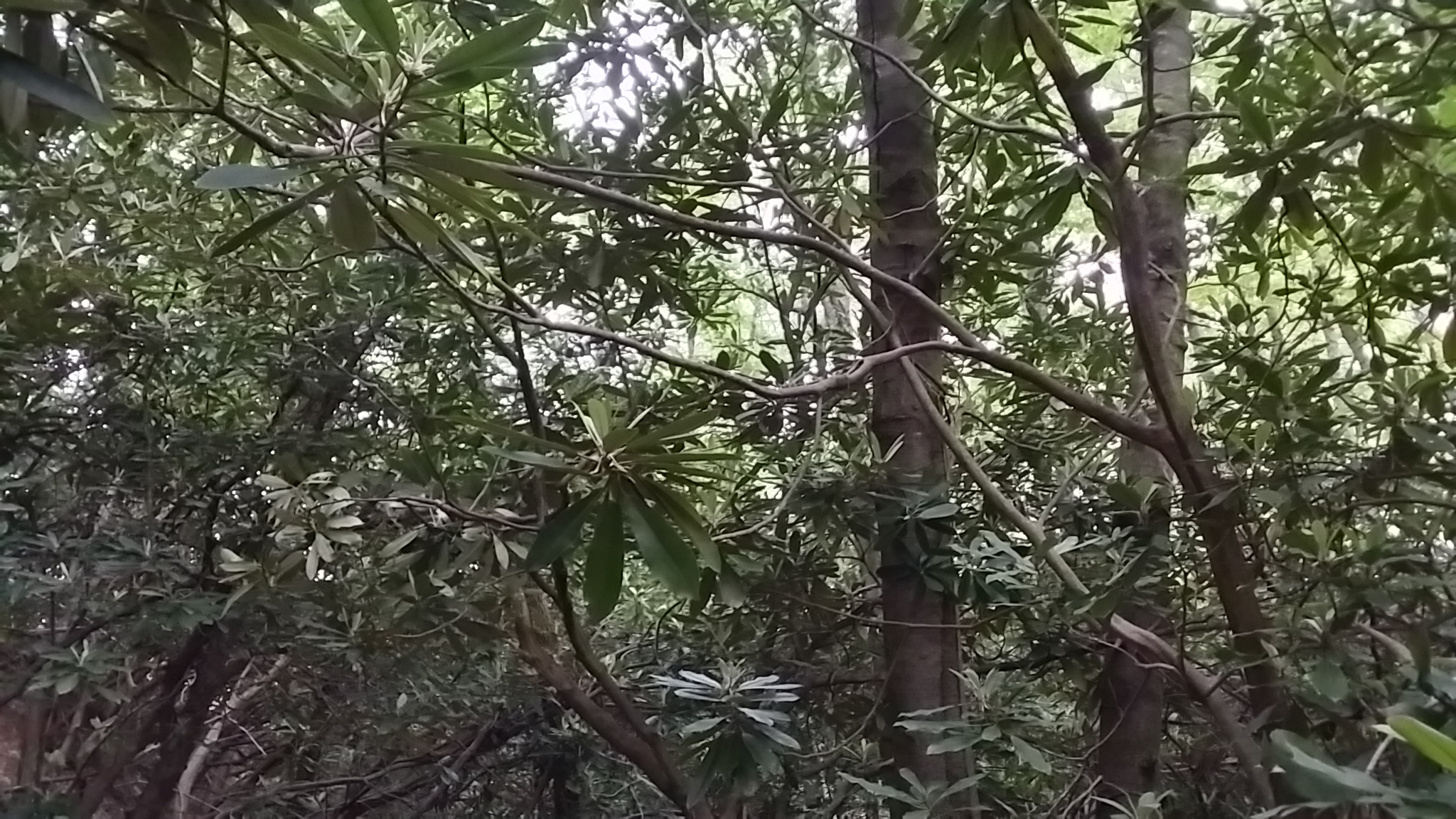 representation along the path where I walked. While some of the tree grew upward, inevitably each tree had branches that had grown horizontally close to the ground, terminating in another cluster of those leaves. A revelation came to me. The tree is me. It is you and the rest of Christians, too. The Sweetbay, or whatever it is, embodies a principle that we all need to apply and often do so without really considering it. Everywhere the branches of the tree went, its leaves were sitting in sunlight. Choked out by much taller trees, the Sweetbay branches meandered about until they found a patch of light. There the leaves clustered and soaked in the light of the sun, enabling the life-giving, energy-rich process of photosynthesis to take place.
Lately my branches have been meandering, trying to find the “new normal,” as the phrase goes. Feeling a little bit in the dark, I need only to go through the process of finding that light. That light will come somewhat through natural processes, but more so through spiritual processes. It’s no accident that light and darkness are frequent scriptural metaphors. Job, in his suffering, noted that God “takes away understanding from the chiefs of the people of the earth and makes them wander in a trackless waste. They grope in the dark without light, and he makes them stagger like a drunken man” (Job 12:24-25, ESV). Job understood that no matter how secure or important a person is, God can easily cause that person to fumble around, wondering what to make of his predicament. Job 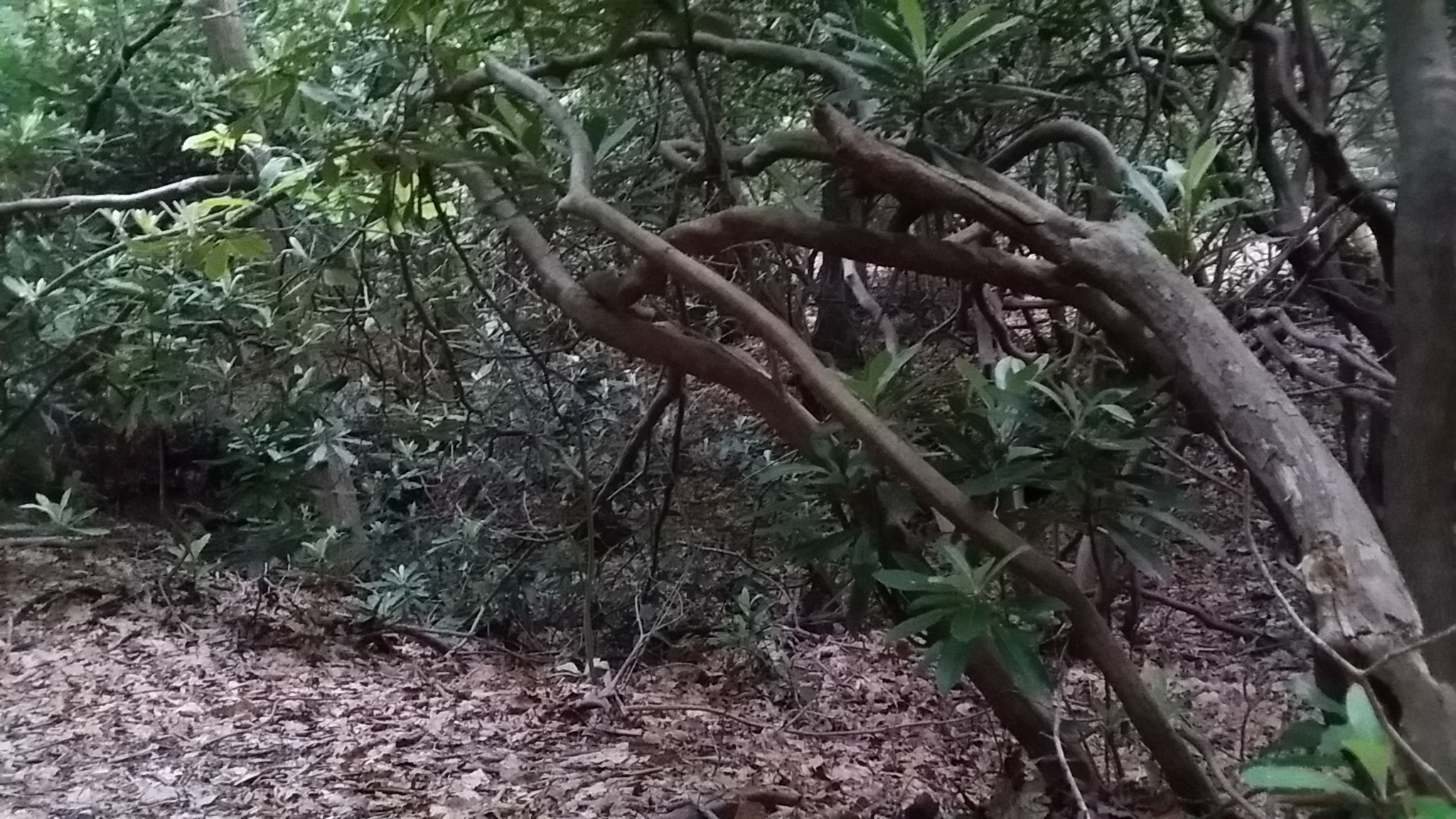 understood this, because he was going through it; he continued that his appeal would be to God Himself. In a similar way, Micah 7:8 records a similar resolve in the midst of confusion: “When I sit in darkness, the Lord will be a light to me” (ESV).
Take Esther as an example. When Haman’s plot against the Jewish people was prevailing, the land was filled with mourning Israelites, particularly Mordecai. After Esther revealed the plot to the king, and the king humiliated and killed Haman, exalted Mordecai, and passed protective legislation of Esther’s people, the Bible says that there was gladness, joy, and honor among the people (Est 8:16); but there was something else: Light. The people had found light after a confusing time in darkness. Though God is not explicitly mentioned in the book, He is the Architect behind it all. Imagine if none of it had ever happened. What if the plot had never existed? The dull normality of life would have taken hold, and Israel in exile would have continued on in dim understanding of their God. “Weeping may last through the night, but joy comes with the morning” (Ps 30:5, NLT). While we may feel like we are in the darkness, our God never is. Consider these encouraging words from Psalm 139:7-12 (NIV):
Where can I go from your Spirit? Where can I flee from your presence? If I go up to the heavens, you are there; if I make my bed in the depths, you are there. If I rise on the wings of the dawn, if I settle on the far side of the sea, even there your hand will guide me, your right hand will hold me fast. If I say, “Surely the darkness will hide me and the light become night around me,” even the darkness will not be dark to you; the night will shine like the day, for darkness is as light to you.
If your branches are doing a little meandering, like mine are, you may feel like you are groping about in the darkness, searching for light. Keep at it. Finding the light is all about finding the true Light. It is about recognizing our trials – even the ones that attend blessings – are designed to help us to understand God in His light more clearly. It is a way for us to mature in all things, so that we can better reflect the light of our Savior to those around us.
My next post will explore this idea as it relates to the church as a whole.
 Undiluted Faith
Pingback: Finding Light, part 2 | Undiluted Faith